

Most software platforms build a marketplace after the core product is established.
The sequence appears logical: create the platform, attract users and then allow third parties to extend it.
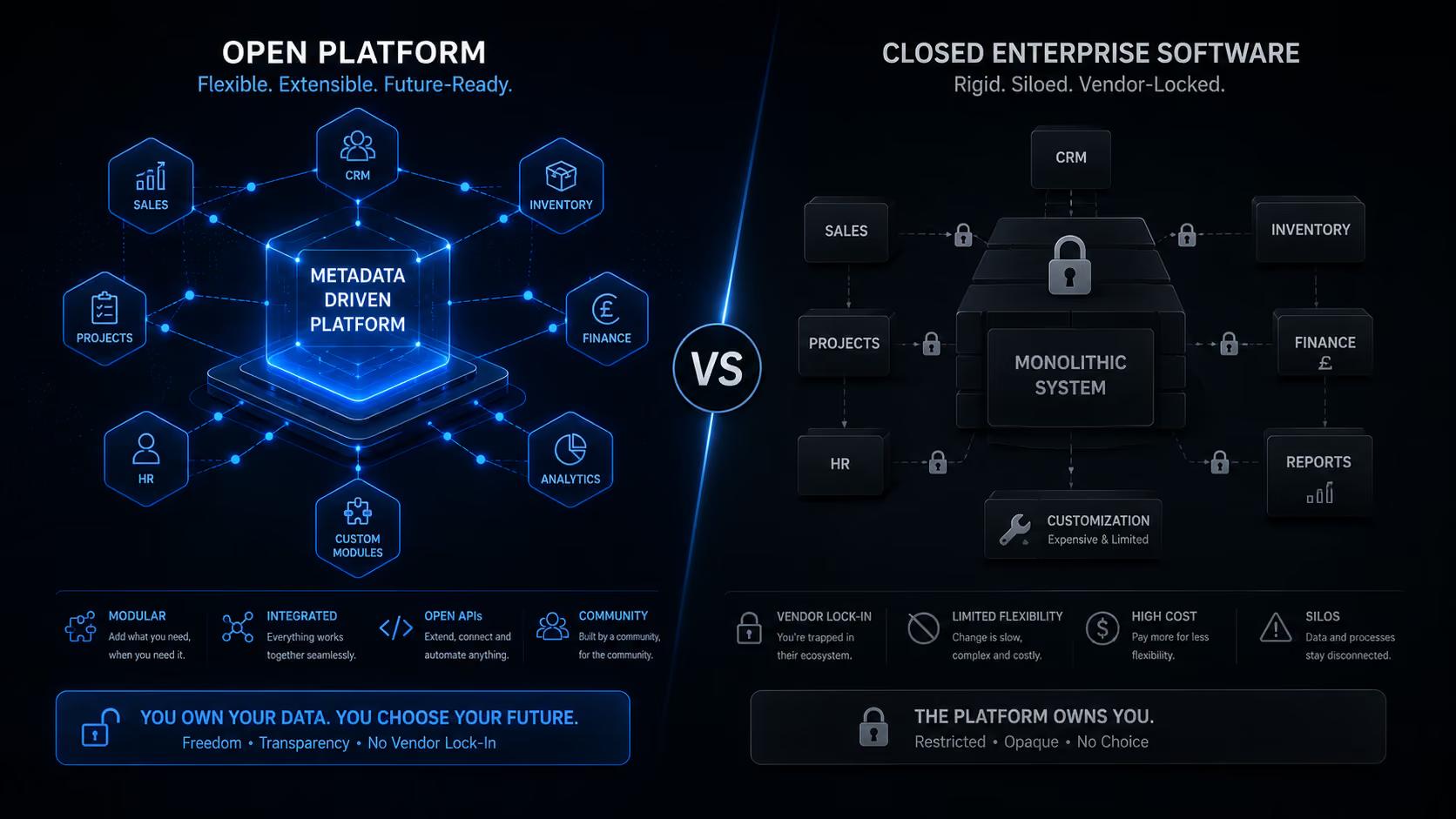
But a marketplace added later is often constrained by architectural decisions made when the product assumed that one company would build everything.
A marketplace-first approach reverses that thinking.
It asks from the beginning how independent developers and consultants will create, test, distribute, update and support reusable business software modules.
That question affects the architecture of the entire platform.
Why Business Software Needs an Ecosystem
No single vendor can understand every industry, geography and business process.
Enterprise software expands continuously into specialist areas: manufacturing methods, regulatory reporting, logistics, professional services, healthcare, construction and thousands of narrower requirements.
A central product team can build common capabilities, but it cannot efficiently deliver every specialised solution.
An ecosystem allows knowledge to come from the people closest to each problem.
Developers can build technical extensions. Consultants can package industry processes. Customers can commission modules that later benefit others.
The Difference Between Extensions and Reusable Modules
Traditional customisation produces extensions for one customer.
A developer changes a screen, adds a workflow or connects an external system. The work solves the immediate problem, but it may remain tied to that implementation.
A marketplace module must meet a higher standard.
- It should declare dependencies clearly.
- It should avoid assumptions about one customer's data.
- It should support configuration rather than source-code changes.
- It should provide upgrade and migration paths.
- It should include documentation and tests.
- It should coexist safely with other modules.
Marketplace-first development encourages these qualities from the start.
The Platform Must Provide Stable Contracts
Third-party developers cannot build reliably against an internal architecture that changes without warning.
The platform needs stable contracts for data, events, user-interface components, permissions and APIs.
Those contracts do not need to remain frozen forever. They do need versioning, compatibility rules and clear deprecation processes.
A module should be able to state which platform capabilities it requires and which versions it supports.
Without that discipline, every platform update risks breaking the ecosystem.
Metadata Makes Modules More Portable
Metadata-driven architecture provides a natural foundation for modular software.
A module can declare the entities, fields, workflows, permissions, interfaces and events it contributes. The platform can validate those declarations before installation.
Because the module works through shared platform concepts, it does not need to modify the core system directly.
This is safer than copying code into a customer's application or allowing extensions to alter central database structures without governance.
It also gives the platform enough information to identify conflicts and dependencies.
Installation Must Be Predictable
A business software module is rarely just a file that can be copied into place.
Installation may need to create data structures, add permissions, register events, introduce configuration pages and connect with existing entities.
A marketplace-first platform treats installation as a managed transaction.
- Pre-installation checks confirm dependencies and compatibility.
- The module declares the changes it will make.
- Migrations run in a controlled sequence.
- Permissions are reviewed explicitly.
- Failures can be rolled back.
- The installed version is recorded for future updates.
Businesses should know what a module changes before allowing it into a production system.
Updates Are More Important Than Installation
The first installation is only the beginning of the relationship.
Business software remains in use for years. The platform changes, regulations change and customer requirements evolve.
Marketplace modules therefore need a credible update model.
Developers should be able to publish new versions with release notes and migration instructions. Customers need control over when updates are applied. The platform should identify security updates separately from optional features.
Compatibility testing can reduce the risk that one update disrupts another module.
Security Cannot Be Delegated Completely
Opening a platform to third-party extensions introduces risk.
A marketplace should not imply that every published module is equally trustworthy.
The platform can reduce risk through technical and commercial controls.
- Permission manifests reveal which data and services a module can access.
- Sandboxing limits what extension code can do.
- Automated scanning identifies known vulnerabilities.
- Reviews and verification provide confidence signals.
- Clear publisher identities improve accountability.
- Rapid suspension mechanisms protect customers when problems emerge.
Some organisations may permit only verified modules. Others may install private extensions developed specifically for them.
The architecture should support different levels of trust.
A Marketplace Needs More Than Code
Useful business modules include knowledge as well as software.
A consultant may publish a compliance workflow, implementation template, reporting pack or industry-specific data model. These assets may contain little custom code but still provide significant value.
A broad marketplace can therefore support several product types:
- Functional modules.
- Integration connectors.
- Workflow templates.
- Industry data models.
- Reports and dashboards.
- User-interface components.
- AI instructions and governed agents.
- Implementation and support services.
This allows different contributors to participate according to their expertise.
Commercial Models Should Remain Flexible
Not every module suits the same pricing model.
Some extensions may be open source. Others may be free but supported commercially. Specialist modules may use subscriptions, usage pricing or one-off licences.
A business may also commission a private module and later choose to release it publicly.
The platform should make ownership and licensing explicit rather than forcing all contributors into one model.
Transparent commercial terms help developers invest in quality and long-term support.
Discovery Is a Product Problem
As a marketplace grows, finding the right module becomes difficult.
Simple categories and keyword search are not enough for complex business software.
Customers need to compare compatibility, supported industries, deployment options, security status, documentation, pricing and support quality.
The platform can use metadata to recommend modules that match the customer's existing data model and installed capabilities.
Consultants can also act as curators, selecting combinations that fit a particular organisation.
The Marketplace Strengthens the Core Platform
An ecosystem is not separate from product development. It provides continuous feedback about what the platform needs.
If many developers build similar workarounds, the underlying capability may belong in the core. If modules repeatedly require a particular extension point, the platform API should improve.
Successful modules reveal real demand. Failed integrations reveal architectural friction.
The marketplace becomes a distributed research and development network.
Avoiding Marketplace Lock-In
A marketplace can create a new form of dependency if modules work only through proprietary formats and cannot be inspected or exported.
An open ecosystem should allow customers to understand what they have installed, retain access to their data and replace modules when necessary.
Developers should compete through capability and service rather than through artificial barriers to migration.
The platform may provide commercial convenience without owning every component of the customer's future.
Conclusion
Marketplace-first software development is an architectural commitment, not merely a sales channel.
It requires stable extension contracts, managed installation, secure permissions, versioning, testing and flexible commercial models.
When those foundations exist, developers and consultants can turn specialist knowledge into reusable products. Businesses gain more choice without returning to uncontrolled customisation.
The result is a platform that can grow beyond the capacity of its original product team while remaining coherent, governable and maintainable.